
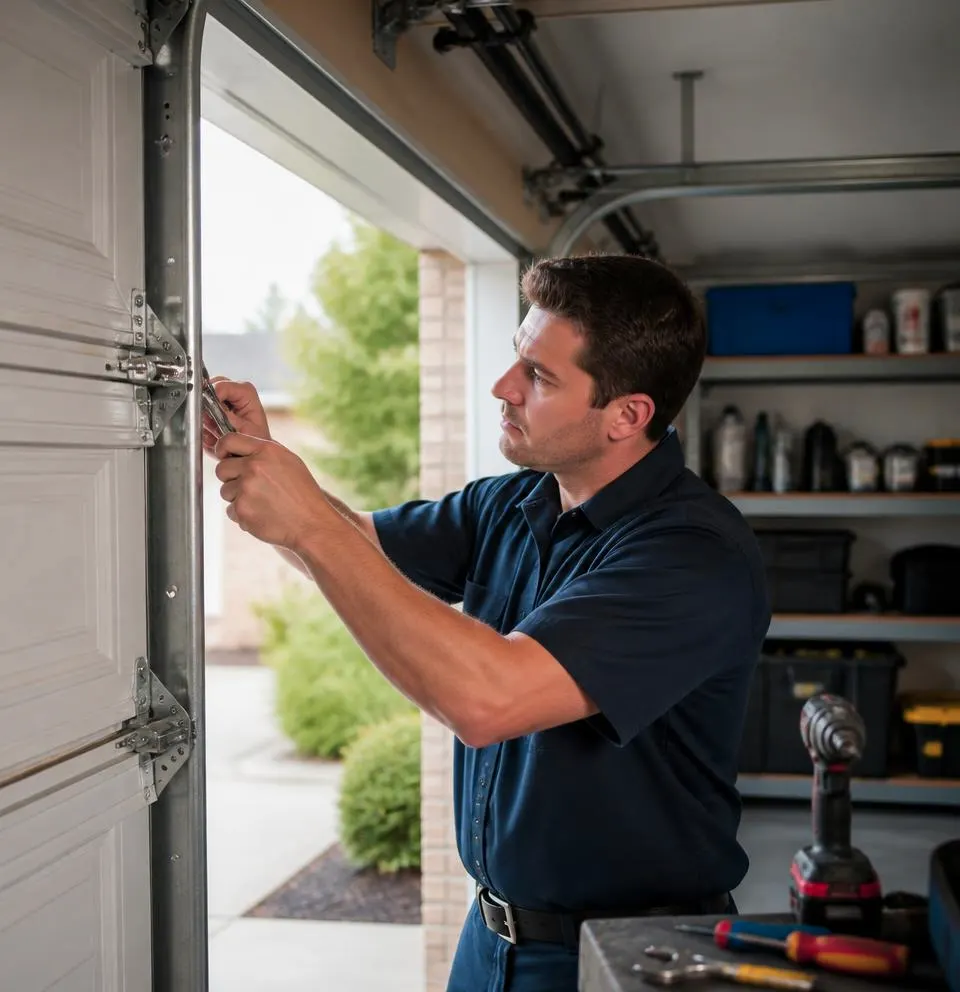
You hit the opener button on a cold morning and the door hesitates, then jerks upward with a groan you haven't heard before. Or maybe it closes a little crooked, scraping one side of the track. Nothing's broken yet, but you can tell something's off. This is usually the moment homeowners either ignore the sound for another six months or finally do something about it. The good news: a short seasonal check, done before winter settles in, catches most of these issues before they turn into a stuck door on a 10-degree morning.
Why Fall Is the Right Time for This
Garage doors in this part of Ohio deal with a lot: humid summers that swell wood and gum up hardware, ice and road salt tracked in all winter, and big temperature swings that make metal contract and lubricant thicken. Doing a quick check now, before the first hard freeze, means your rollers and hinges are lubricated and your weatherstripping is sealed up before moisture has a chance to freeze the door to the slab or seep into the opener's electronics.
Tools You'll Need
- A silicone-based garage door lubricant (not WD-40, which attracts dust)
- A clean rag or two
- A socket set or cordless drill with a socket bit
- A flashlight
- A soft brush or shop vac for track debris
- A step stool, if you need one to reach the tracks
The 20-Minute Routine
- Look before you touch. With the door closed, walk the full width and look for daylight gaps, cracked or flattened weatherstripping along the bottom and sides, and any rust spots on hinges or tracks — rust shows up fast once road salt gets tracked in over winter.
- Clean the tracks. Brush or vacuum out dirt, leaves, and the gritty buildup that collects over summer. Debris in the track is a common reason doors start running crooked or catching.
- Lubricate the moving parts. Apply silicone lubricant to the rollers, hinges, and the springs themselves (a light coat, not a soak). Wipe off excess so it doesn't drip and collect grit. This single step does more to prevent winter stiffness than almost anything else on this list.
- Tighten visible hardware. Doors vibrate thousands of times a year, and bolts on the track brackets and hinges work loose. Go over them with a socket set, snugging anything that's loose — but don't force anything that feels stuck.
- Check the weatherstripping. If it's cracked, brittle, or compressed flat, replace it now rather than after the first ice storm. Worn seals let in cold air and let meltwater pool under the door, which refreezes overnight.
- Test the auto-reverse safety feature. Place a 2x4 flat on the ground where the door closes. The door should reverse the moment it touches the wood. If it doesn't, stop using the opener until it's looked at — this is a safety system, not a convenience feature.
- Run the balance test. Disconnect the opener (pull the release cord) and lift the door manually about halfway. It should stay put on its own. If it falls or shoots upward, the springs are out of balance — note it, but don't adjust it yourself.
- Check the opener's battery backup, if you have one. Spring storms and summer outages happen here too, and a dead backup battery means a stuck door at the worst time.
What You Can Safely Handle Yourself
Cleaning tracks, lubricating hardware, tightening visible bolts, swapping worn weatherstripping, and testing the auto-reverse and balance are all reasonable DIY tasks. None of them require touching the springs or cables directly.
What Needs a Technician
Torsion and extension springs are under heavy tension and have caused serious injuries to homeowners who tried to adjust or replace them without the right tools. The same goes for cables, a door that's visibly off-track, an opener motor that grinds or stalls, or a balance test that fails. Those jobs call for a technician, not a weekend project.
When to Call Mt Sterling Garage & Gate
If your balance test fails, the door won't reverse properly, or you're hearing new grinding or popping sounds, it's time to call. We handle spring replacement safely with the right equipment, and we offer maintenance and tune-ups that cover everything in this checklist plus the parts that aren't safe for a homeowner to touch — track alignment, cable tension, and opener calibration. Catching a worn spring or a misaligned track before winter is a lot easier than dealing with a door frozen shut on a January morning.
If you're in Mt Sterling, Washington Court House, London, Circleville, Jeffersonville, South Solon, West Jefferson, or Williamsport and want your garage door and gate ready for the cold months ahead, give Mt Sterling Garage & Gate a call. We'll get it checked, tuned, and running the way it should before the first hard freeze hits.